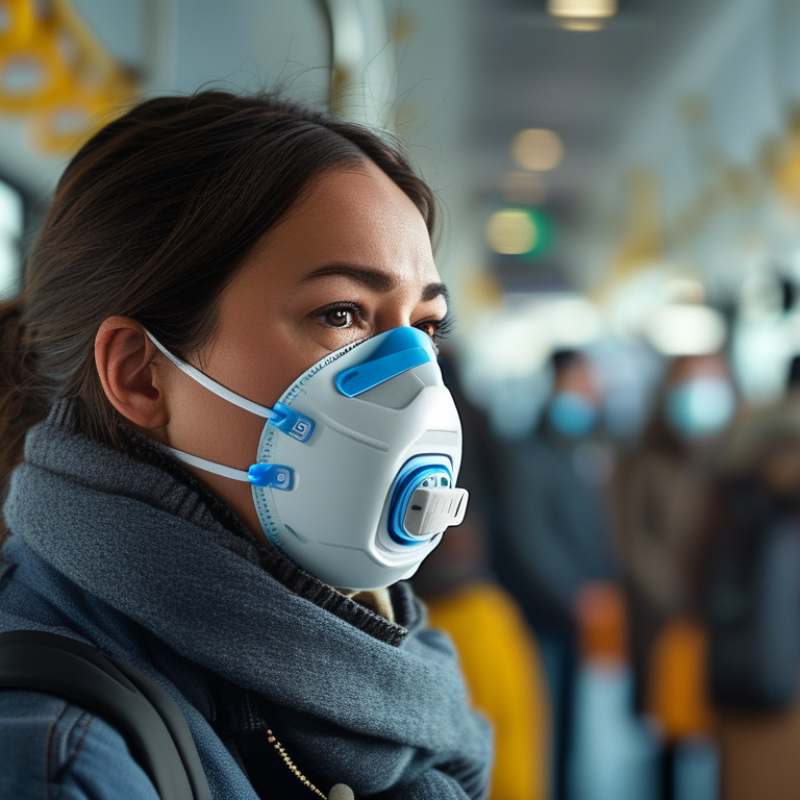
Why are valved masks banned in some places? The answer begins with their design. A valved mask may filter air entering the mask, but its one-way valve can release exhaled air directly into the surrounding space. Picture a crowded bus, a clinic hallway, or a checkout line. Each breath can leave through the small plastic valve with little filtering.
Aerosol scientist Dr. Linsey Marr explains the central concern: “The valve allows air to escape without being filtered.” Her expertise helps clarify the issue. The restriction usually focuses on protecting other people, not only the wearer. Public health agencies and workplace authorities may therefore require non-valved respirators or masks, especially in healthcare and shared indoor environments. Rules differ by location, purpose, and current guidance. They are not identical everywhere.
Still, the subject deserves careful thinking. A valved respirator can feel cooler and easier to breathe through. That comfort may encourage longer use. Yet comfort does not automatically mean adequate source control. This is where many explanations become too simple. Not every valve works in exactly the same way, and mask quality, fit, and condition also matter. The practical question is not merely whether a mask has a valve. It is whether the design filters both inhaled and exhaled air effectively.
This guide examines why are valved masks banned in some places, what the valve changes, and when those restrictions may apply. It also separates evidence from assumptions. Small details matter.
How to Know Why Valved Masks Are Banned in Some Places?
A valved mask has a small one-way outlet near the mouth or cheek. During inhalation, the valve stays closed. It helps filter incoming air through the mask material. During exhalation, pressure opens the valve. Warm, moist air escapes more easily. This design can reduce heat and breathing resistance during physical work. However, the outgoing breath may bypass the main filter. That difference matters.
A NIOSH-approved N95 respirator filters at least 95% of airborne particles under laboratory conditions. Fit remains essential. A valve does not automatically remove the respirator’s wearer protection. Yet it can weaken source control, because droplets and aerosols may leave through the outlet. The World Health Organization’s 2020 mask guidance discouraged masks with exhalation valves in infection-control settings. The CDC also explains that valved respirators may protect the wearer without adequately protecting people nearby. This is why some hospitals, transit systems, and workplaces restrict them. The exact policy can vary.
Tips: Check the valve direction, seal, and certification marking. A simple fit check helps, but it is not a formal fit test. Use a non-valved, well-fitting respirator when protecting nearby people matters. Keep the advice practical. The evidence is strong, but not every valve performs identically. That detail is easy to overlook.
| Data Dimension | What It Means | Key Facts | Public-Health Relevance |
|---|---|---|---|
| Definition | A valved mask is a face covering fitted with one or more one-way exhalation valves. | The valve is designed to open mainly when the wearer breathes out and to close when the wearer breathes in. | It can improve comfort, but it may reduce control of exhaled respiratory particles. |
| Main Components | The mask body, filtering material, face seal, straps, and exhalation valve work together as the breathing system. | Some designs also include a nose clip or other features intended to improve fit. | Protection depends on both the filter and how closely the mask fits the face. |
| Inhalation Phase | When the wearer breathes in, outside air is pulled through the mask material. | A properly functioning valve generally remains closed during inhalation, while the filter is intended to reduce the entry of particles. | Inward protection varies according to filter performance, fit, leakage, and correct use. |
| Exhalation Phase | When the wearer breathes out, air may leave through the valve rather than passing through the filtering layers. | The valve lowers exhalation resistance and may make breathing feel easier. | Unfiltered or less-filtered exhaled air can travel into the surrounding space. |
| Source-Control Performance | Source control means limiting particles released by the person wearing the mask. | A valve can allow exhaled particles to escape without passing through the mask’s main filter. | This is the central reason valved masks may be unsuitable where reducing transmission from the wearer is required. |
| Breathing Resistance | Breathing resistance is the effort needed to move air through the mask. | Opening the exhalation valve can reduce heat, moisture, and exhalation effort inside the mask. | Greater comfort does not necessarily mean better protection for people nearby. |
| Fit and Leakage | Fit describes how well the mask seals around the nose, cheeks, and chin. | Gaps can allow air to bypass the filter in either direction; facial hair, movement, and incorrect adjustment may increase leakage. | A high-performing filter cannot provide its intended protection if the overall fit is poor. |
| Why Some Places Restrict Them | Some facilities and transport systems require masks that filter both inhaled and exhaled air. | A valved design may conflict with source-control policies because its exhalation route can bypass the main filter. | Restrictions are intended to protect other people in shared indoor or high-risk environments. |
| Not a Universal Ban | Rules differ by location, purpose, product design, and current public-health guidance. | A restriction in one setting does not automatically mean that every valved mask is prohibited everywhere. | Users should check the specific requirements of the workplace, facility, event, or transport provider. |
| Commonly Preferred Alternative | A well-fitting, non-valved mask with filtration across the entire breathing surface is generally preferred for source control. | The wearer’s exhaled air is directed through the filtering material instead of an open exhalation valve. | This design better supports protection of both the wearer and people nearby when properly fitted and used. |
| Inspection and Maintenance | The mask and valve should remain intact, clean where applicable, and free from visible damage. | Cracks, loose parts, blocked valves, wet materials, or a damaged seal can affect performance. | Damaged or contaminated masks should be replaced or handled according to the applicable instructions. |
| Decision Checklist | Before use, identify whether the setting requires source control, inward protection, or both. | Check for an exhalation valve, confirm fit, review local rules, and follow the manufacturer’s instructions. | The safest choice depends on the environment, the user’s needs, and the applicable health and safety requirements. |
Note: Mask performance depends on design, fit, condition, and correct use. Local regulations and public-health guidance should always take priority.
It has a small one-way outlet near the mouth or cheek. The valve opens during exhalation.
During inhalation, the valve usually stays closed. During exhalation, warm, moist air escapes more easily.
It may protect the wearer when the filter and face seal work properly. Fit remains essential.
Exhaled air may leave through the valve with little filtration. Droplets and aerosols can travel outward.
Shared spaces need source control. A valve can weaken protection for people nearby, even when wearer protection remains useful.
No. It may describe a hospital, workplace, transit, or venue rule. Requirements vary by region and activity.
Check the valve direction, seal, cracks, dust, and certification marking. Look closely.
No. It can reveal obvious leakage, but it does not replace a formal fit test.
Use one when protecting nearby people matters, especially in crowded or shared indoor spaces.
Not necessarily. Performance can change with movement, facial hair, moisture, and repeated use. I once overlooked that.
Valved masks are designed to make breathing out easier by using a one-way exhalation valve. The valve usually allows air to leave with less resistance while the mask’s main filtering material helps protect the wearer from inhaled particles. However, when the wearer exhales, the outgoing air may pass through the valve with limited or no filtration. This means potentially infectious respiratory droplets or aerosols can enter the surrounding air.
This explains why are valved masks banned in some places, especially crowded indoor settings where protecting other people is as important as protecting the wearer. Authorities typically consider the mask’s filtration performance, valve design, fit, breathing resistance, and the risk of community transmission before imposing restrictions. For shared spaces, masks without exhalation valves generally provide more balanced protection. Features such as multiple filtering layers, a close seal around the nose and face, adjustable edges, and comfortable construction can help reduce both inward and outward particle movement.

 Tobe Health