Type I and Type II masks can look almost identical on a clinic shelf. The useful differences are less visible: bacterial filtration efficiency, splash resistance, and the standard printed on the packaging. Under EN 14683, Type I masks require at least 95% bacterial filtration efficiency, while Type II masks require at least 98%. Type IIR masks also resist fluid splashes. Small label details matter.
Filtration researcher Dr. Peter Tsai has emphasized that a mask’s filtration material plays a key role in capturing particles. That principle offers a helpful starting point, but it does not replace checking the product standard, intended use, and fit. In this guide, how to distinguish between type i and type ii masks means reading the label, comparing stated performance, and inspecting practical details such as ear loops, nose wire, and coverage from nose to chin. A neat-looking mask is not proof of a particular rating.
Look closely. Then verify the claims. We will compare the markings, filtration figures, splash-resistance descriptions, and common packaging cues that separate these mask types. One caution: labels can be confusing, and a mask that meets a stated standard may still fit poorly on a particular face. That is worth considering, not glossing over. The goal is a careful comparison, not a guess based on color or shape.
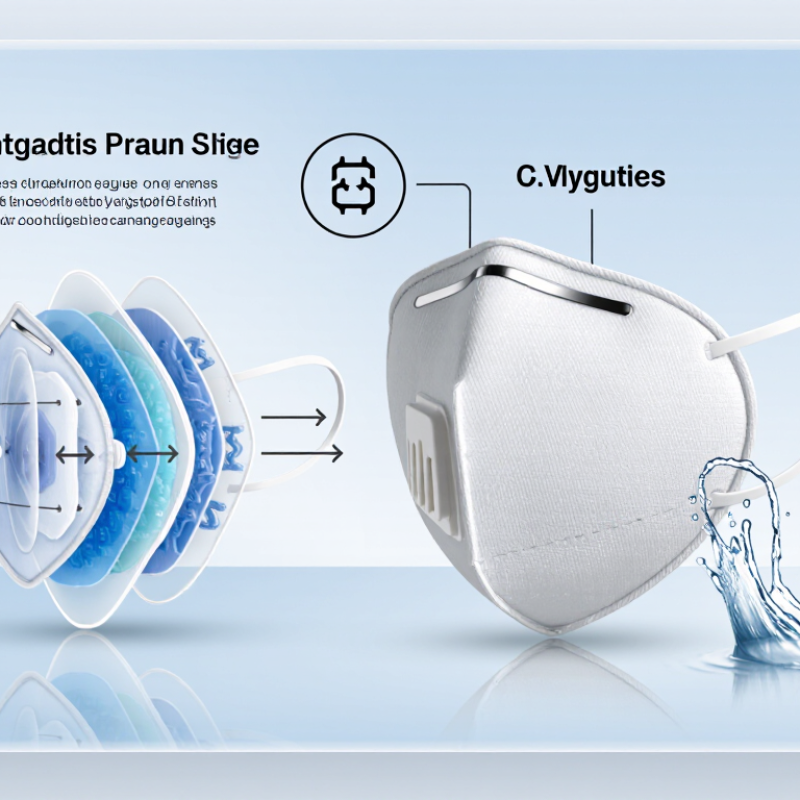
Type I and Type II are categories of medical face masks, commonly classified under the EN 14683 standard. Both are designed to limit the spread of droplets from the wearer, but they are not respirators and do not seal tightly around the face. A small gap near the nose can matter.
The key difference is bacterial filtration efficiency, measured in laboratory tests. Type I masks must achieve at least 95% filtration, while Type II masks must reach at least 98%. These figures describe test performance, not guaranteed protection in every situation. Type I masks are generally intended for settings where reducing infection spread is important, while Type II masks are commonly used by healthcare professionals in clinical environments. Check the product’s stated standard and intended use.
Type II does not automatically mean splash-resistant. The Type IIR designation adds a test for resistance to fluid splashes, such as droplets encountered during certain procedures. Breathability and fit also matter: a mask should cover the nose, mouth, and chin, with no obvious side gaps. The labels are useful, but they are not the whole story. A well-fitting Type I may be more practical than a poorly fitted Type II; that detail is easy to overlook.
| Comparison point | Type I medical mask | Type II medical mask |
|---|---|---|
| 1. Bacterial filtration efficiency (BFE) | Must achieve a BFE of at least 95% under EN 14683. | Must achieve a BFE of at least 98% under EN 14683. |
| 2. What the BFE figure means | The standard’s bacterial-filtration test result meets the Type I threshold of 95% or higher. | The standard’s bacterial-filtration test result meets the higher Type II threshold of 98% or higher. This test result alone does not describe the mask’s fit on a wearer. |
| 3. Intended use in the standard | Primarily intended to help reduce the risk of infection spreading, particularly when used by patients in appropriate settings. | Intended for healthcare professionals in operating rooms or healthcare settings with similar requirements. |
| 4. Operating-room suitability | Not the type specified by EN 14683 for operating-room use by healthcare professionals. | The standard identifies Type II for operating-room use or comparable healthcare settings, subject to the setting’s requirements. |
| 5. Breathability test | Must have a differential pressure below 40 Pa/cm². | Must have a differential pressure below 40 Pa/cm². This requirement is the same as for Type I. |
| 6. Splash resistance | EN 14683 does not require Type I to pass the splash-resistance test. | EN 14683 does not require Type II to pass the splash-resistance test. The splash-resistant variant is Type IIR. |
| 7. Type IIR distinction | Type I is not designated “R” for splash resistance. | Type IIR meets the Type II BFE requirement and adds a splash-resistance requirement of at least 16.0 kPa. |
| 8. Microbial cleanliness | Must meet the EN 14683 cleanliness limit of no more than 30 cfu/g. | Must meet the same limit: no more than 30 cfu/g. |
| 9. Fit and face seal | Type I classification does not establish a tight face seal or a respirator-style fit. | Type II classification also does not establish a tight face seal or a respirator-style fit. Fit is not the defining difference between these types. |
| 10. What to check on product information | Look for a clear Type I designation and reference to EN 14683. Check that the product information matches the applicable standard edition. | Look for a clear Type II designation and reference to EN 14683. A splash-resistance claim should be associated with Type IIR, not Type II alone. |
Note: This comparison summarizes EN 14683 medical-mask classifications. Type I and Type II describe performance and intended-use categories; neither classification alone guarantees a particular fit or replaces a respirator where respiratory protection is required.
Both help limit droplets from the wearer. Neither is a respirator, and neither seals tightly against the face. A small nose gap matters.
Their required bacterial filtration efficiency differs. Type I requires at least 95% BFE; Type II requires at least 98% under EN 14683.
No. BFE comes from laboratory testing and does not measure fit or leakage. I would not treat the number as a promise.
Check the packaging for its declared type and applicable standard. Look for manufacturer details, a product reference, and a batch or lot number. Small print is easy to miss.
Not by itself. Type IIR adds splash-resistance testing while retaining the Type II BFE requirement. The stated threshold is 16.0 kPa.
Compare the packaging with its technical sheet or test report. If the type or standard is missing, ask the supplier before relying on the claim. A quick glance has limits.
It should cover your nose, mouth, and chin, with no obvious gaps at the sides. Check beside your cheeks, too.
Not necessarily. A well-fitting Type I may work better in practice than a loose Type II. That detail is easy to overlook.
This guide explains how to distinguish between type i and type ii masks by comparing their intended use and key performance characteristics. It describes how bacterial filtration efficiency (BFE) helps separate the two categories, while also considering breathing resistance and resistance to splashes. Rather than relying on appearance alone, readers are encouraged to look at the information printed on mask packaging and check that the stated type and applicable standards are clearly identified.
The article also connects these differences to practical settings. Type I masks may suit some lower-risk situations, while Type II masks may be more appropriate where stronger filtration performance is needed. Choosing between them means considering the environment, the level of exposure to droplets or splashes, comfort, and the mask’s verified specifications. Labels and test information provide a more dependable basis for comparison than assumptions based on a mask’s design.

 Tobe Health