2026 Top KN95 Masks Can Children Wear Adult Sizes?

Time:2026-10-28 Author:Ethan
0%

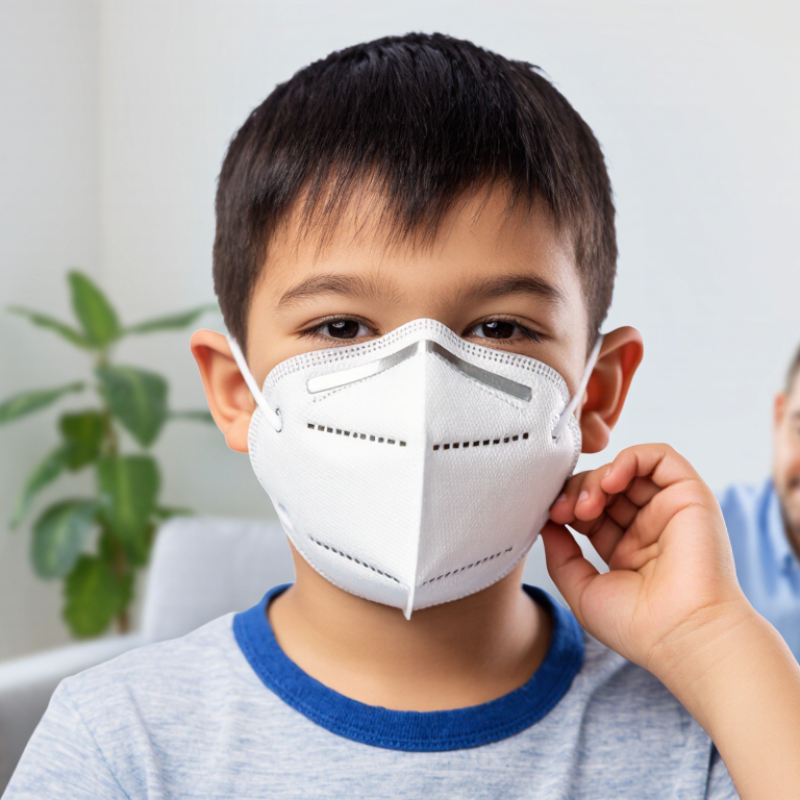
Choosing a mask for a child is not simply a matter of selecting a smaller-looking product. Parents often ask, “can children wear adult kn95 masks?” The practical answer depends on fit, breathing comfort, age, and the child’s ability to wear the mask correctly. An adult KN95 may cover a child’s cheeks, press against the eyes, or leave gaps near the nose. Those gaps can reduce protection, even when the mask has a high filtration rating.

Dr. Leana Wen, an emergency physician and public health expert, has emphasized, “The best mask is the one that fits well and is worn consistently.” That principle matters here. A mask should sit securely over the nose, mouth, and chin without constant adjustment. Parents can check for air escaping around the edges while the child speaks and breathes normally. Ear loops should not pull painfully. The child should also be able to communicate clearly.

This article examines when adult-sized KN95 masks might be unsuitable, how fit affects real-world performance, and what warning signs parents should notice. A younger child may remove a mask repeatedly. An older child may tolerate it better, but size still matters. I used to think filtration claims were the main issue. They are not. A technically strong mask can perform poorly on a small face. Product labels can also be confusing, and no single size works for every child. Careful observation remains essential. When breathing feels difficult, the mask slips, or anxiety increases, parents should stop and seek professional guidance.

2026 Top KN95 Masks Can Children Wear Adult Sizes?

What KN95 Masks Are and How Adult Sizes Differ from Children’s Sizes

KN95 masks are filtering facepiece respirators made under China’s GB 2626 standard. The “95” refers to a required filtration efficiency of at least 95% under laboratory testing. However, filtration is only one part of protection. A 2021 CDC and NIOSH evaluation of imported respirators found performance varied between models, so certification and fit both deserve attention.

Adult-size KN95 masks can fit some older children, but they are not automatically suitable. Adult masks often have wider edges, longer ear loops, and a larger nose area. On a child’s face, these differences may create gaps near the cheeks or under the chin. A loose mask can let unfiltered air enter. Children’s sizes usually use smaller dimensions, but sizing is not standardized across manufacturers. A child should breathe comfortably, speak clearly, and keep the mask sealed while turning the head. Facial movement matters.

Tips: Place the mask over the nose and chin. Check for gaps around the cheeks. Do not tie, cut, or heavily modify the mask. Replace it when damp, dirty, damaged, or difficult to breathe through. Children under two should not wear masks, according to CDC guidance. Even a well-tested respirator may fail during active play. That detail is easy to overlook.

2026 Top KN95 Masks: Can Children Wear Adult Sizes?

KN95 is a filtration performance class, not a universal mask-size system. Adult and child users should receive the same minimum filtration benchmark when the mask is properly certified, but an adult-size mask may not seal well on a smaller face.

Adult-size masks

Adult sizes are generally designed for larger facial dimensions. Gaps around the nose, cheeks, or chin can reduce real-world protection.

Children’s fit

Children should use a mask that seals comfortably without slipping, obstructing breathing, or requiring repeated adjustment. There is no single universal child-size dimension.

Key takeaway

The chart shows the 95% minimum particle-filtration benchmark associated with the KN95 class. Filtration performance does not guarantee a good fit for every face.

Reference: GB 2626-2019 performance classification. The 95% value is a minimum filtration requirement; mask fit, face shape, movement, and correct wearing technique affect actual protection.

How to Determine Whether an Adult KN95 Fits a Child Safely

Can Children Wear Adult KN95 Masks?

An adult KN95 may fit an older child, but age alone is not enough. The mask should cover the nose, mouth, and chin without touching the eyes. It must seal gently against the cheeks. Gaps near the nose or jaw can reduce protection significantly. CDC guidance emphasizes that fit matters as much as filtration. The KN95 standard requires at least 95% filtration under laboratory conditions, according to GB 2626-2019. That result does not guarantee a proper fit on a child’s face.

A 2020–2021 NIOSH assessment reported that about 60% of evaluated imported respirators failed performance requirements or appeared counterfeit. This finding shows why appearance is not reliable. Check the mask before every use. Ask the child to breathe normally, talk, and turn the head. Watch for slipping, fogged glasses, exposed skin, or difficult breathing. Children under two should not wear masks, according to CDC guidance. Children who cannot remove a mask independently need close adult supervision. An adult-size mask may seem secure at first. It can loosen during play.

Tips: Choose a smaller respirator when available. Press the nose clip carefully. Use clean hands. Replace a wet, damaged, or stretched mask. Never tie loose loops without checking the seal. A fit check can miss tiny leaks, so reassess after movement. Facial shapes vary, and even careful advice cannot replace professional fit testing.

2026 Top KN95 Masks Can Children Wear Adult Sizes? - How to Determine Whether an Adult KN95 Fits a Child Safely

Assessment Dimension What to Check Evidence of a Suitable Fit Warning Signs
Mask size and coverage Compare the mask dimensions with the child’s face. The mask should cover the nose, mouth, and chin without extending into the eyes. The mask remains centered and does not obstruct vision or interfere with normal movement. The mask is too large, folds near the eyes, leaves the chin exposed, or shifts when the child talks.
Nose and cheek seal Inspect the areas around the nose, cheeks, and sides of the face while the child breathes normally. The edges lie flat against the skin with no visible gaps. Gaps appear beside the nose or cheeks, or air can be felt escaping around the edges.
Nosepiece adjustment Mold the nosepiece gently across the bridge of the nose using both hands. The nosepiece follows the child’s nose shape and stays in place during speech and gentle activity. The nosepiece cannot be shaped adequately, causes discomfort, or leaves a persistent gap.
Chin coverage Check whether the lower edge remains under the chin rather than resting on the mouth or neck. The chin is fully enclosed and the lower edge does not roll or ride upward. The mask slips above the chin, leaves an opening underneath, or repeatedly needs repositioning.
Strap tension Observe whether the ear loops or headbands maintain contact without excessive pressure. The mask stays secure without painful pressure, skin injury, or frequent adjustment. Straps are loose enough to create gaps, or tight enough to cause pain, redness, or headache.
User seal check After putting on the mask, ask the child to breathe in and out normally and report noticeable leakage. The mask feels slightly drawn toward the face during inhalation, with no obvious leakage around the perimeter. Airflow is clearly felt around the edges, or the mask moves substantially with each breath.
Speech and movement test Have the child speak, turn the head, smile, and walk carefully for several minutes while supervised. The seal remains stable and the child can communicate and move comfortably. The mask slips, collapses against the mouth, or causes repeated touching and readjustment.
Breathing comfort Ask about breathing difficulty, dizziness, overheating, anxiety, or discomfort. Supervise use. The child breathes comfortably and remains alert and able to communicate. Remove the mask and seek medical advice if breathing difficulty, dizziness, faintness, or severe discomfort occurs.
Standard and labeling A KN95 is generally made to meet China’s GB 2626 standard. Check the packaging for the applicable standard and model information. The product has clear, traceable labeling and is used according to its instructions. Missing labeling, unclear documentation, damaged packaging, or claims that confuse KN95 status with NIOSH approval.
Child’s ability to use it correctly Consider whether the child can put on, remove, and keep the mask positioned without constant assistance. The child follows instructions and does not repeatedly touch or uncover the mask. The child cannot maintain the fit, frequently removes the mask, or is too young to use it safely without supervision.
Key safety point: An adult-size KN95 should not be selected solely by age or filtration claims. It is suitable only when it forms a consistent, comfortable seal on the individual child’s face and can be used correctly. There is no universal adult KN95 size, and a visual check cannot replace a formal fit test.
Important: Masks should not be used on children who cannot remove them independently or who have breathing problems unless a qualified healthcare professional advises otherwise. Follow local public-health guidance and the mask manufacturer’s instructions.

Why Proper Fit Matters More Than the Mask’s Labeled Size

2026 Top KN95 Masks Can Children Wear Adult Sizes?

An adult-size KN95 mask may fit some children, but the label alone cannot answer that question. Proper fit matters more than the printed size. A mask should cover the child’s nose, mouth, and chin without pressing painfully against the eyes. It should also stay in place while the child talks, turns, and walks.

Check the edges carefully. Gaps near the cheeks or under the chin can let unfiltered air enter. Ask the child to breathe normally, then speak a short sentence. Watch for mask movement, strap slipping, or air leaking near the nose.

A bendable nose area can improve the seal, but it cannot fix a mask that is clearly too large. Small faces often need shorter straps or a smaller design.

Comfort is part of safety. If a child keeps touching the mask, pulls it below the nose, or complains of difficult breathing, the fit is not working. Children with glasses may notice fogging, which can signal leakage, though humidity can cause it too.

Fit checks are useful, but they are not professional testing. I would also reconsider any quick recommendation based only on age or weight. Face shape differs widely, even among siblings. Adult sizing may work for one child and fail completely for another.

Caregivers should follow healthcare guidance when a child has breathing conditions or cannot remove the mask independently.

Key Features to Check When Choosing a KN95 for a Child

2026 Top KN95 Masks Can Children Wear Adult Sizes?

An adult-size KN95 may fit an older child, but age alone cannot determine suitability. The mask must cover the nose and mouth without pressing the eyes. A snug seal matters more than the printed size.

Check the mask’s standard marking, manufacturer instructions, ear-loop strength, and nose-wire flexibility. GB 2626-2019 requires KN95 respirators to filter at least 95% of test particles under laboratory conditions. That result does not guarantee protection on a child’s face. The U.S. CDC explains that gaps can reduce real-world performance, even when the filter works properly. A child should breathe comfortably, speak clearly, and keep the mask in place while moving.

Try the mask indoors for several minutes. Look for air leaking around the cheeks, chin, or nose. If glasses fog repeatedly, the seal may be poor.

Adult masks often have deeper folds and longer loops, which can collapse against a smaller face. Adjustable ear loops can help, but tying loops may create pressure or unstable gaps. Fit is everything.

Children under two should not wear masks, according to CDC guidance. Children with breathing difficulties need medical advice before using a respirator. Also, do not reuse a visibly wet, dirty, or damaged mask. Some parents choose adult sizes because child sizes are unavailable; that is understandable, but not automatically safe. A face-fit check is more reliable than a birthday-based guess.

How Children Should Wear, Remove, and Replace KN95 Masks

Children can wear an adult-size KN95 only when it seals comfortably and stays secure during movement. A loose mask may leak around the cheeks, nose, or chin. It should not cover the eyes or make breathing difficult. Children younger than two should not wear masks, according to CDC guidance.

Check the fit before leaving home. The nose clip should press gently across the bridge, while the lower edge rests under the chin. Ask the child to speak, smile, and turn their head. Watch for gaps. A mask that slips during reading or play needs adjustment, not wishful thinking. NIOSH explains that fit strongly affects respirator performance, although KN95 products are not NIOSH-approved respirators. CDC laboratory research reported that better-fitting mask combinations reduced exposure by about 77% to 85%, showing why fit matters.

Teach removal by clean hands and the ear loops, not the front panel. Store the mask in a clean, breathable paper container if it will be reused briefly. Replace it when wet, dirty, crushed, damaged, or harder to breathe through. Do not wash disposable KN95 masks. Follow the product’s instructions when available. This routine is easy to describe, but children forget. Adults should check the seal again after lunch, exercise, or outdoor play. An adult mask may technically fit, yet a smaller model could work better. There is no perfect shortcut.

FAQS

What is a KN95 mask?

A KN95 is a filtering facepiece respirator. It is designed to filter at least 95% of particles during laboratory testing. That number does not guarantee a good fit.

Can a child wear an adult-size KN95 mask?

Sometimes, but age alone is not enough. The mask must cover the nose, mouth, and chin without touching the eyes. A smaller size is usually worth trying.

How can I check whether an adult mask fits a child?

Ask the child to breathe, speak, smile, and turn their head. Look for gaps beside the cheeks, near the nose, or under the chin. Watch for slipping.

What signs show that the mask fits poorly?

Fogged glasses, exposed skin, and frequent slipping are warning signs. The child may also struggle to breathe or speak clearly. Small gaps matter.

How should a child wear the mask during play?

Check the seal before leaving home. Check it again after running, eating, or outdoor play. Active movement can loosen the mask.

How should children remove a KN95 mask?

Clean hands should handle the ear loops, not the front panel. Keep the mask away from desks, floors, and dirty pockets. The front may be contaminated.

When should a KN95 mask be replaced?

Replace it when wet, dirty, crushed, damaged, or difficult to breathe through. Do not wash disposable masks. A stretched mask may leak.

Can children under two wear these masks?

Children under two should not wear masks under common public-health guidance. Older children who cannot remove a mask need close adult supervision. Safety comes before convenience.

Are laboratory filtration results enough?

No. Filtration and facial fit both affect protection. A mask can pass laboratory testing yet leak on a child’s face. Appearance is not proof.

Conclusion

Can children wear adult kn95 masks? In some cases, an adult-sized KN95 may be suitable for an older child, but the label alone does not determine safety. KN95 masks are designed to filter airborne particles, while children’s versions generally use smaller dimensions, shorter straps, and shapes better suited to smaller faces. The most important factor is whether the mask creates a comfortable, secure seal without gaps around the nose, cheeks, or chin.

Parents or caregivers should check that the child can breathe comfortably, speak clearly, and keep the mask in place without constant adjustment. Look for adjustable nose features, soft edges, secure but gentle ear loops, and materials that do not cause irritation. Children should wash or sanitize their hands before putting on or removing a mask, avoid touching the front, and replace a mask when it becomes wet, dirty, damaged, or difficult to breathe through. Any child who feels dizzy, short of breath, or distressed should remove the mask safely and seek adult assistance.

Ethan

Ethan

Ethan is a seasoned marketing professional with a deep expertise in our company's innovative product line. With a passion for sharing knowledge and insights, he takes the lead in regularly updating our corporate blog, where he explores industry trends, product features, and effective marketing......