Unused face masks seem simple to store, yet a damp drawer or dusty countertop can undo careful handling. The best routine is easy: protect each mask from moisture, dirt, crushing, and unnecessary contact. If you are researching how to store unused face masks properly, begin with the packaging and care instructions supplied by the manufacturer.
Aerosol scientist Linsey Marr has studied how masks filter airborne particles. The following is a practical paraphrase of principles relevant to mask care, not a verbatim quotation: “Keep masks clean, dry, and protected from contamination.” For unopened disposable masks, leave them in their original packaging and place the box in a cool, dry cupboard. Keep it away from sinks, steamy bathrooms, direct sunlight, and household chemicals. A clean shelf is better than a busy kitchen counter.
For masks removed from packaging but still unused, use a clean, dry container or resealable bag. Label it if several mask types share the same drawer. Do not pack masks tightly beneath heavy items; bent nose wires and crushed folds can affect fit. Small details matter.
Reusable fabric masks need different care: wash and fully dry them according to their care labels before storing. Never seal a damp mask inside a bag. If a mask becomes wet, dusty, or damaged, check its instructions before use. Storage cannot restore a mask that has lost its shape or condition. And honestly, a tidy storage system only helps when people use it consistently.
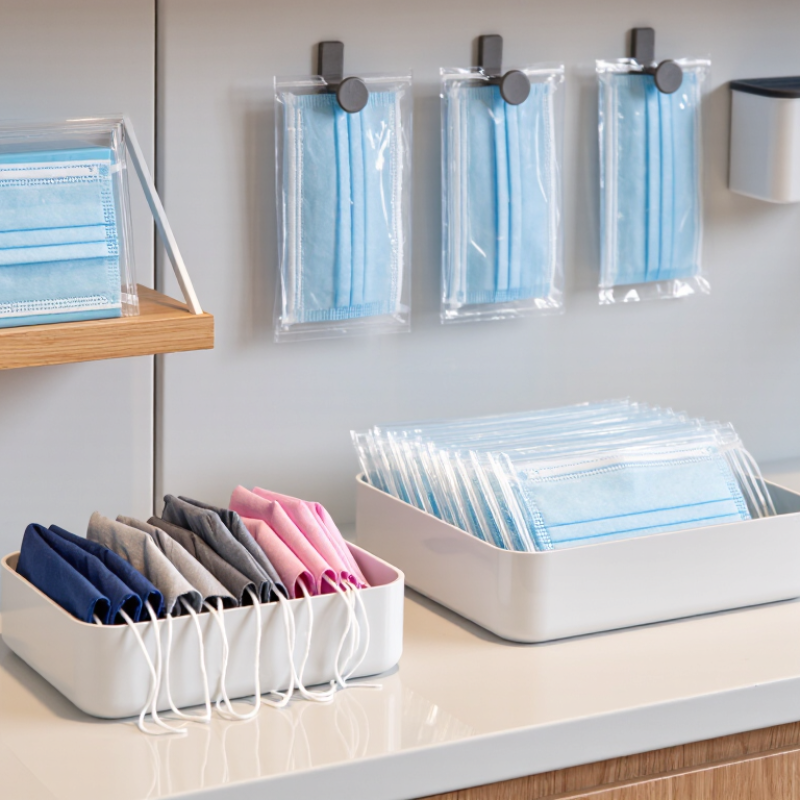
What counts as an unused face mask? Usually, it is one that has not been worn and remains clean, dry, and undamaged. Opening the package does not automatically make a mask used. But if it has touched a desk, the floor, or the inside of a bag, its cleanliness is harder to judge. That distinction matters.
A mask worn for even a short trip is no longer unused. Moisture from breathing, skin oils, and handling can collect on its surface. Hold a disposable mask by its ear loops when checking it. Look for dust, damp spots, torn edges, or bent straps. If anything seems off, do not save it as a clean spare.
For reusable cloth masks, “unused” can mean freshly washed and completely dry, though it is clearer to call these clean rather than unused. Follow the care instructions for that mask type. Keep clean spares in their original packaging or a clean, dry container, away from loose items such as keys.
I used to think a mask left in a drawer was ready to go. Not always.
A drawer can be dusty, and damp bathrooms are poor storage spots. If you are unsure where a mask has been, choose a fresh one.
The best storage method depends on the mask type, so check its label before putting it away. Keep unused disposable medical masks in their original packaging, in a clean, dry place away from sunlight, heat, and splashes. Reusable cloth masks should be stored clean and fully dry; follow the care instructions before using them again. For a disposable respirator, preserve its shape and straps, and avoid squeezing it into a crowded drawer. NIOSH’s N95 certification test uses an aerosol flow of 85 liters per minute and requires at least 95% filtration efficiency. That benchmark applies to testing—not to a mask that has been damaged or stored poorly.
Tips: Keep masks away from bathrooms, car dashboards, and damp bags. If the package is open, place the mask in a clean, breathable container; do not seal a damp mask in plastic. Check for torn straps, crushed edges, or moisture before use. A mask can look fine and still fit poorly. I used to assume a closed drawer was enough, but dust and humidity can change that.
Sources: CDC guidance on respirator storage and care; NIOSH filtration certification test procedures.
Unused face masks stay in better condition when kept in a clean, dry place away from dust and handling. A closed drawer or cupboard works well if it is not near a sink, stove, or heater. Not the bathroom. Steam and splashes can make a storage spot less suitable, even when the shelf looks tidy. Keep masks away from direct sunlight, damp laundry, and household sprays. Heat, moisture, and grime are easy to overlook.
Leave disposable masks in their original packaging when possible, then place the package in a clean drawer or covered container. If the wrapping is open, use a clean, dry box and avoid packing masks tightly. A container may look neat but still need washing; let it dry fully before adding masks. For reusable masks, make sure each one is completely dry before storage, and keep clean masks separate from used ones. Before wearing a mask, check that it is dry, intact, and free of visible dirt. If storage conditions were poor, do not assume it is still suitable. A simple shelf can be enough, provided it stays clean and protected.
Unused masks stay cleaner when protected from dirt, moisture, and pressure. Keep them in their original packaging until needed, if it is clean and intact. Otherwise, place them in a clean, dry container with a lid. Reserve that container for masks. A drawer may work, but avoid one shared with makeup, loose coins, or dusty tools. Keep masks away from sinks, windows, heaters, and direct sunlight. Heat and moisture can damage some materials, so check the manufacturer’s care instructions. Small details matter. Don’t cram masks into a pocket or bag with keys; sharp edges can snag fabric or straps. Store them flat, with nothing heavy on top.
Before using a stored mask, clean your hands and inspect it for dust, stains, tears, or misshapen ear loops. If it is damp or visibly damaged, choose an intact, dry mask instead. For reusable masks, follow the care instructions and let each one dry fully before storage. A clean, breathable pouch can help when carrying a mask for a short time, but it does not replace clean storage at home. I used to assume a tightly closed container was always best. Not quite: a damp mask sealed inside may stay damp. Let it dry first.
Store masks away from contamination and damage. This checklist shows recommended practices (1) and practices to avoid (0); the values are guidance, not measured risk scores.
Keep masks clean and dry, separate from used items, and protected from dust, moisture, and crushing. Follow the mask manufacturer’s instructions when available.
Before wearing a stored face mask, take it out in good light and inspect it closely. Check the fabric or filter for tears, holes, crushed areas, stains, or damp spots. Look along the seams and around the ear loops or ties. They should be secure, not stretched or frayed. Check the nose piece too; a bent or loose piece may prevent a comfortable fit. Small defects can be easy to miss. Turn the mask over.
Notice any unusual odor, discoloration, or signs of mold. If the mask feels damp or smells musty, do not wear it. Follow the maker’s care and storage instructions, especially for disposable masks and respirators, since their reuse guidance can differ. A mask that looks fine may still have been stored poorly, so appearance alone cannot confirm its performance. It is tempting to trust a clean-looking package. Pause anyway. If you are unsure about its condition, replace it rather than relying on a questionable mask. Before leaving home, put it on and check that it covers your nose and mouth without gaps at the sides.
It has not been worn and remains clean, dry, and undamaged. An opened package alone does not make it used.
No. Breathing moisture, skin oils, and handling can affect it, even after a brief outing. Choose a fresh one.
Use a clean, dry drawer or covered container, away from dust, sunlight, heaters, and household sprays. Not the bathroom.
Yes, if you place them in a clean, dry box. Avoid packing them tightly, and keep them away from loose items like keys.
Inspect it in good light. Look for tears, stains, damp spots, crushed areas, and frayed straps. Turn it over, too.
No. Do not wear a mask that feels damp, smells unusual, or shows possible mold. Replace it if unsure.
A freshly washed, completely dry cloth mask may be clean. “Unused” is less clear, so follow its care instructions.
Not necessarily. Appearance alone cannot confirm its condition or performance. I used to trust a tidy package. That was not careful enough.
Unused face masks are masks that have not been worn and remain clean and intact, though their packaging and condition may differ. To decide how to store unused face masks properly, first check the mask type and any storage instructions that came with it. Keep masks in a clean, dry place away from direct sunlight, excess heat, moisture, dust, and other sources of contamination. A closed drawer or clean storage container can help protect them, provided the masks are fully dry before being put away.
Store masks so they are not crushed, stretched, or exposed to sharp objects or strong odors. Keep them separate from used masks and frequently handled household items. Before wearing a stored mask, inspect it for signs of dampness, dirt, damage, or changes to its straps and fit. If it appears compromised, do not use it. Regularly checking stored masks helps ensure they remain in suitable condition until needed.

Tobe Health